
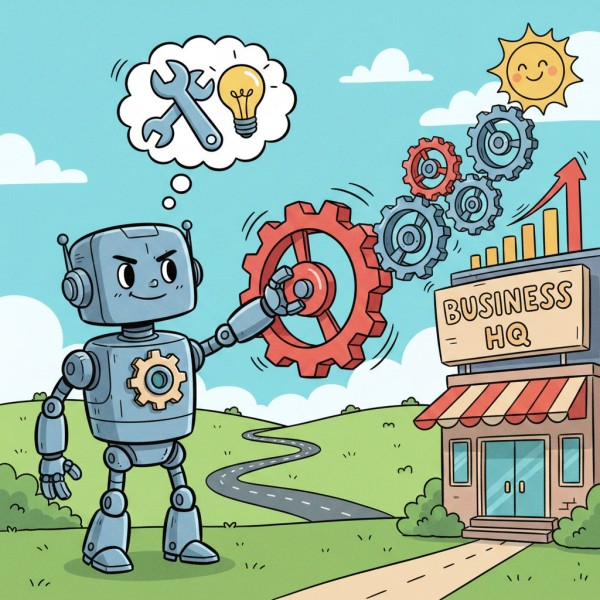
Shifting from Doing the Work to Leading Your Business
What you'll learn
 Strategic LeadershipLong-Term Goal SettingMarket Opportunity AnalysisSystem Building and Delegation
Many small business owners and side hustlers begin their journey by wearing every hat imaginable. You are the salesperson, the marketer, the product developer, the customer service representative, and the accountant, all rolled into one. This hands-on, operational approach is often necessary and even admirable in the early stages, as it allows you to learn every facet of your business and maintain tight control. However, for your venture to truly grow, scale, and thrive beyond your direct, daily efforts, a fundamental shift in mindset is not just beneficial—it's absolutely essential. The transition from being solely the one who “does the work” to becoming a strategic manager who sets long-term goals and identifies market opportunities is the cornerstone of sustainable success.
The Initial "Doer" Mindset: A Necessary Starting Point
When you first launch a small business or side hustle, your energy is primarily focused on execution. You're deep in the trenches, making sure products are created, services are delivered, and customers are happy. This stage is crucial for understanding your market, refining your offerings, and building initial momentum. This direct involvement allows for agility and quick problem-solving, which are invaluable when establishing a new venture. Without this initial phase of doing, it’s hard to build the foundation.
However, as your business gains traction, this intensely operational focus can quickly become a bottleneck. Your capacity becomes limited by your own time and energy. You might find yourself constantly overwhelmed, unable to pursue new initiatives, or feeling like you're just treading water. This is the first signal that it's time to elevate your perspective.
Why the Managerial Shift is Critical for Growth
Staying perpetually in the “doer” role will inevitably cap your business's potential. To achieve true scalability and resilience, you must consciously transition into a more strategic, managerial role. This shift isn't about working less; it's about working smarter and focusing on higher-leverage activities that drive the entire business forward. Without this, your business remains a reflection of your individual output, rather than an independent, growing entity.
- Scalability: You cannot personally handle an ever-increasing volume of work. A managerial perspective enables you to build systems and empower others to take on tasks, allowing your business to expand without hitting your personal capacity limits.
- Sustainability: Reducing your direct involvement in every daily task makes the business more robust and less reliant on your continuous, direct effort. This protects against burnout and creates a more stable operation.
- Innovation and Adaptation: When you're not constantly bogged down by operational details, you free up mental space for creative thinking, exploring new ideas, and adapting to changing market conditions. This is where true competitive advantage is born.
- Strategic Direction: A manager's role is to look ahead, steer the ship, and ensure the business is moving towards a defined future. Without this long-term vision, your business might drift aimlessly or miss significant opportunities.
Embracing the Manager's Role: Thinking Strategically
Transitioning to a managerial mindset means changing your perspective from "how do I do this task?" to "how can this task be done most effectively, and by whom?" It involves stepping back from the immediate grind and looking at the bigger picture. This strategic view encompasses several key areas:
Setting Your Business's North Star: Long-Term Goals
One of the most fundamental aspects of managerial thinking is the ability to define and pursue long-term goals. This goes beyond the immediate sales targets or project deadlines. Think 1, 3, or even 5 years into the future. What do you want your business to achieve? Where do you envision it being in terms of market position, revenue, brand recognition, or societal impact? Establishing a clear, compelling vision provides a 'north star' for all your current decisions and efforts.
These long-term goals should be SMART: Specific, Measurable, Achievable, Relevant, and Time-bound. For example, instead of "I want more sales," a managerial goal might be, "Achieve a 20% market share in the local artisanal coffee niche within three years, supported by opening two new locations and launching an online subscription service." Breaking down these ambitious goals into smaller, actionable milestones helps maintain focus and track progress.
Unearthing Hidden Treasures: Identifying Market Opportunities
A true manager constantly scans the horizon for new opportunities that can propel the business forward. This proactive approach means moving beyond simply reacting to current demand and actively seeking out untapped potential. Here are a few ways to cultivate this skill:
- Stay Informed: Regularly research industry trends, emerging technologies, and shifts in consumer behavior. Subscribe to industry publications, attend virtual conferences, and follow thought leaders.
- Listen to Your Customers (Deeply): Beyond just fulfilling orders, engage with your customers to understand their evolving needs, pain points, and desires. Often, their feedback can spark ideas for new products, services, or market segments.
- Analyze Competitors and Adjacent Markets: What are your competitors doing well, or not so well? What services or products in related industries are experiencing growth? Look for gaps they might be missing or areas where you can differentiate.
- Leverage Data: Use sales data, website analytics, social media insights, and customer surveys to identify patterns, popular products, and potential areas for expansion or improvement. Data-driven decisions are hallmark of effective management.
Building Systems, Not Just Completing Tasks
A crucial step in the transition is to think in terms of systems and processes. Instead of just "doing" customer onboarding, document the steps, tools, and communication involved. Instead of simply "shipping orders," create a standardized fulfillment process. By systematizing repetitive tasks, you achieve consistency, improve efficiency, and create a framework that can be easily delegated or automated. This allows the business to function more independently of your direct physical involvement in every single operation.
The Art of Effective Delegation and Empowerment
Once you have documented processes, you can begin to effectively delegate. This isn't about offloading unpleasant tasks; it's about empowering others (whether freelancers, part-time staff, or future employees) to take ownership of specific areas. A manager trusts their team, provides clear expectations and resources, and focuses on the desired outcomes rather than micromanaging every step. This frees up your most valuable asset—your time—to focus on the strategic work that only you, as the owner, can do.
Measuring Progress and Adapting Your Course
Finally, a managerial mindset involves continuously monitoring performance against your goals and being willing to adapt. Define Key Performance Indicators (KPIs) that directly relate to your long-term objectives. Regularly review these metrics, analyze what's working and what isn't, and be prepared to pivot your strategies as market conditions change. The business world is dynamic, and a good manager knows when to adjust the sails rather than stubbornly steer into a storm.
Summary: The Path to Sustainable Growth
The journey from a hands-on “doer” to a strategic manager is not always easy, but it is absolutely fundamental for the sustainable growth and long-term success of your small business or side hustle. It requires a conscious shift in perspective—from focusing solely on daily tasks to setting a clear vision, identifying opportunities, building robust systems, and empowering others through effective delegation. By embracing this managerial role, you transform your venture from a personal project into a resilient, scalable enterprise capable of thriving in an ever-evolving market.
Comprehension questions
 List three reasons why adopting a managerial mindset is crucial for a small business's long-term growth and sustainability.According to the article, what are two key strategies for identifying new market opportunities?How does building systems and effective delegation contribute to a business owner's ability to focus on strategic tasks?