
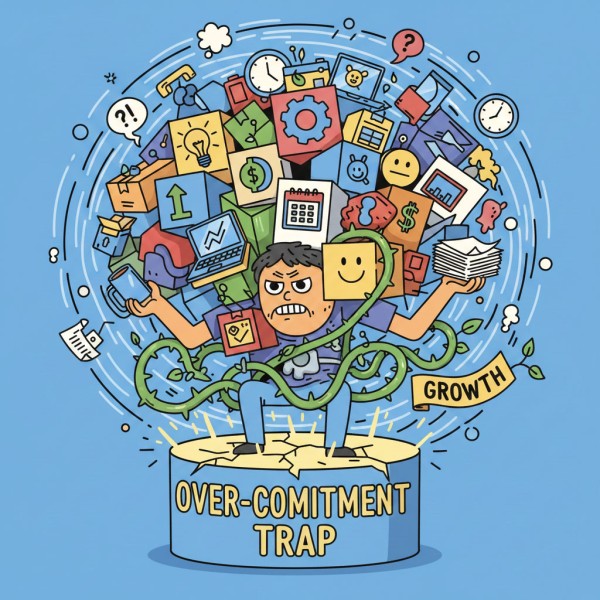
Why Doing Less Leads to More Growth
What you'll learn
 Strategic FocusResource AllocationDecision MakingSustainable Growth
For small business owners and side hustlers, the temptation to expand, diversify, and take on every promising opportunity can be overwhelming. In a competitive landscape, it often feels like doing more is the only path to success. However, an insidious trap lies in this 'more is better' mindset: over-committing to too many services or products. While well-intentioned, spreading your resources and attention too thinly can dilute your focus, hinder innovation, and ultimately slow down, rather than accelerate, your much-desired growth. Understanding this paradox is crucial for staying on track and building a truly sustainable and profitable venture.
The Illusion of Opportunity
Every new product idea, service offering, or market segment can appear as a golden opportunity. There's a fear of missing out, a worry that if you don't seize every chance, someone else will. This can lead to a gradual expansion of your business into areas that, while potentially profitable on their own, don't necessarily align with your core strengths or long-term vision. Each addition demands resources – time, money, and mental energy – that could otherwise be dedicated to refining and strengthening your existing, most profitable offerings.
Consider the cumulative effect: a new service requires marketing materials, customer support protocols, potential new software, and training for your team, even if it's just you. These aren't one-off tasks; they are ongoing demands that chip away at your bandwidth.
The True Cost of Spreading Thin
The consequences of over-commitment are multifaceted and often underestimated until they manifest as tangible problems.
- Diluted Focus: When your attention is split across multiple projects, no single area receives the full, intense focus required for true excellence and innovation. Your marketing messages become muddled, your product development slows, and your strategic vision loses clarity.
- Reduced Quality: Spreading your team or your own capabilities too thinly inevitably leads to a decline in the quality of your output. Whether it's less thorough customer service, slower product updates, or a general lack of polish, customers notice, and your brand reputation suffers.
- Slower Decision-Making: With more moving parts, decisions become more complex and time-consuming. What should be a straightforward choice can become a tangled web of considerations about how it impacts every service or product you offer.
- Increased Operational Costs: Each additional offering often comes with its own set of overheads, from subscription services for different tools to increased inventory or staffing needs. These costs can quickly erode profits, especially if the new offerings aren't performing as well as anticipated.
- Burnout: For owners and teams alike, constantly juggling multiple priorities leads to stress, exhaustion, and a higher risk of burnout. This impacts productivity, creativity, and overall job satisfaction.
Regaining Your Edge: Strategies for Focus
Reclaiming your focus requires a deliberate and often difficult decision to say 'no' to opportunities that don't align perfectly with your core mission. It means a strategic pivot back to simplicity and depth.
Start by auditing your current offerings. Which ones are truly performing? Which ones generate the most profit with the least effort? Which ones are most beloved by your ideal customers? Don't be afraid to prune underperforming or distracting services or products.
Key strategies include:
- Define Your Core Competency: Clearly articulate what you do best and what unique value you provide. Let this guide all future decisions. If an opportunity doesn't directly enhance or leverage this core, it's likely a distraction.
- Set Clear Boundaries: Establish criteria for evaluating new opportunities. Before saying 'yes,' ask yourself: Does this align with my long-term vision? Do I have the dedicated resources for this without compromising existing commitments? What is the projected ROI and effort?
- Implement a 'Less Is More' Mentality: Instead of constantly seeking new things to add, focus on optimizing and improving what you already have. Can you make your best service even better? Can you streamline the delivery of your most popular product?
- Automate and Delegate: Free up your time by automating repetitive tasks and delegating responsibilities where possible. This doesn't mean taking on more, but rather optimizing your current workflow to allow for deeper focus on strategic growth areas.
The Power of Less
Embracing a philosophy of 'less is more' allows small businesses and side hustles to achieve significant, sustainable growth. By concentrating your efforts, resources, and innovation on a smaller, more focused set of offerings, you can achieve unparalleled excellence in those specific areas. This deep focus fosters expertise, builds a stronger brand reputation, and creates a clearer value proposition for your customers. It's about doing a few things exceptionally well, rather than many things adequately, paving the way for consistent, accelerated success.
Summary
Over-committing to numerous services or products can critically dilute focus and impede growth for small businesses and side hustles. While the allure of new opportunities is strong, spreading resources too thinly leads to diminished quality, slower decision-making, increased costs, and ultimately, burnout. To counteract this, businesses must strategically define their core competencies, set clear boundaries for new ventures, adopt a 'less is more' approach, and prioritize optimizing existing offerings to cultivate deeper focus and sustainable success.
Comprehension questions
 What are some common reasons small business owners fall into the trap of over-committing?List three negative consequences of spreading your business's resources too thinly across multiple offerings.What key strategies can small businesses employ to regain focus and avoid the pitfalls of over-commitment?How does defining a 'core competency' help in making decisions about new opportunities?