Essential Legal and Ethical Considerations
- -->> 8. Essential Legal and Ethical Considerations
What you'll learn
 Compliance FrameworksData Privacy & SecurityIntellectual Property RightsEthical Decision-Making
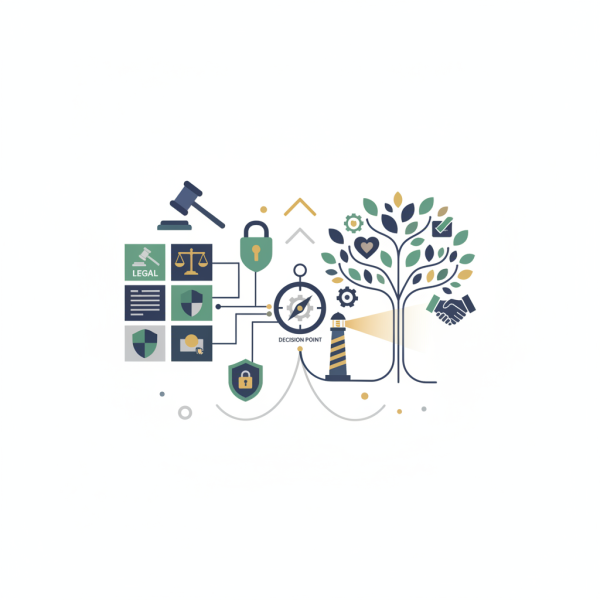
Professionals across all sectors face a constant imperative to navigate complex legal and ethical landscapes. Adhering to these guidelines is not merely about avoiding penalties; it is fundamental to building and maintaining trust with clients, colleagues, and the public, while safeguarding an organization's reputation and ensuring long-term sustainability. A deep understanding and consistent application of legal and ethical principles form the bedrock of professional integrity.
Understanding the Legal Landscape
The legal environment in which businesses and professionals operate is vast and continually evolving. Compliance with laws and regulations is non-negotiable and varies significantly by industry and geographical location. Key areas often include consumer protection laws, labor laws, anti-discrimination statutes, and financial regulations.
Ignoring legal mandates can lead to severe consequences. These may range from hefty fines and legal injunctions to criminal charges for individuals and significant reputational damage for organizations. Establishing robust internal compliance programs and regularly updating them to reflect new legislation is crucial for proactive risk management.
Ethical Foundations
Beyond the letter of the law, ethical considerations guide professional conduct, often addressing situations where legal frameworks may be ambiguous or insufficient. Ethics are rooted in core principles such as honesty, integrity, fairness, transparency, and respect. These principles shape the values and culture within an organization and among professionals.
Many professions have established codes of conduct that outline expected ethical behaviors. Adhering to these codes fosters a culture of accountability and helps professionals make sound judgments even in challenging circumstances. Upholding ethical standards is vital for building and maintaining the trust that is essential for any successful professional relationship or business operation.
Data Privacy and Security
In the digital age, data has become an invaluable asset, but its handling comes with immense responsibility. Protecting personal and sensitive information is paramount, with regulations like GDPR, CCPA, and HIPAA setting strict standards for data collection, storage, processing, and sharing. Professionals must ensure they understand and comply with these privacy mandates.
Data breaches can have catastrophic consequences, leading to financial losses, severe reputational damage, and erosion of public trust. Implementing comprehensive data security measures is therefore essential. This includes technical safeguards as well as organizational policies and procedures.
- Implementing strong encryption for data at rest and in transit.
- Establishing strict access controls based on the principle of least privilege.
- Conducting regular security audits and penetration testing.
- Developing incident response plans for data breaches.
- Providing mandatory data privacy and security training for all employees.
Intellectual Property Rights
Innovation and creativity are driving forces in modern economies, and protecting intellectual property (IP) is critical. This encompasses copyrights for original works, trademarks for brand identification, and patents for inventions. Professionals must be aware of their own IP rights and, equally important, respect the IP rights of others.
Unauthorized use, reproduction, or distribution of copyrighted material, patented inventions, or trademarked brands can lead to legal disputes, significant financial penalties, and a damaged professional reputation. Organizations should have clear policies regarding the creation, use, and protection of intellectual property, fostering a culture that values and respects innovation.
Ethical Decision-Making Frameworks
Navigating ethical dilemmas requires a structured approach. Professionals often encounter situations where the 'right' choice is not immediately apparent. Having a framework for ethical decision-making can provide clarity and consistency, ensuring decisions align with organizational values and legal obligations.
- Identify the Ethical Issue: Clearly define the dilemma and the conflicting values or principles.
- Gather Information: Collect all relevant facts, consider all stakeholders, and understand the potential impact.
- Evaluate Alternatives: Brainstorm possible courses of action and assess them against legal requirements, ethical principles, and professional codes.
- Make a Decision: Choose the best option, articulating the reasoning behind it.
- Implement and Review: Put the decision into action and reflect on its outcomes to learn for future situations.
Whistleblowing and Reporting Mechanisms
A crucial component of maintaining legal and ethical integrity is the presence of robust whistleblowing and reporting mechanisms. Organizations must provide safe, confidential, and accessible channels for employees to report unethical behavior, legal violations, or other misconduct without fear of retaliation. Protecting whistleblowers is not only a legal requirement in many jurisdictions but also an ethical imperative that encourages transparency and accountability.
An organizational culture that supports open communication and encourages employees to speak up is invaluable. Such mechanisms help identify and address issues early, preventing minor problems from escalating into major crises and reinforcing a commitment to ethical conduct at all levels.
Summary
Navigating the complex interplay of legal and ethical considerations is an ongoing, essential responsibility for all professionals. This article has explored the critical importance of understanding and adhering to legal mandates, upholding foundational ethical principles, safeguarding data privacy, respecting intellectual property rights, and utilizing structured approaches to ethical decision-making. Furthermore, the role of effective whistleblowing mechanisms in fostering transparency and accountability was highlighted. Committing to these principles is not just about compliance, but about cultivating a professional environment built on trust, integrity, and sustainable practice.
Comprehension questions
 Why is a comprehensive understanding of legal and ethical guidelines crucial for professionals in today's environment?What are some key components of an effective data privacy and security strategy discussed in the article?How do intellectual property rights contribute to professional integrity and innovation?Describe the steps involved in a robust ethical decision-making framework as outlined in the article.
Community Poll
Next Lesson
Course Contents : Running a Freelance Bookkeeping Business
- >> 8.
 Essential Legal and Ethical Considerations