Leveraging Proximity for Unmatched Customer Service
- -->> 1. Leveraging Proximity for Unmatched Customer Service
What you'll learn
 Personalized Customer EngagementBusiness Agility and ResponsivenessCommunity Integration BenefitsEffective Feedback Mechanisms
In a world increasingly dominated by large corporations and global online retailers, the small business often feels like an underdog. However, for those serving individual customers, being a small business is not a weakness but arguably your single greatest asset. The power of proximity – both physical and relational – allows small businesses to forge connections and deliver experiences that larger entities simply cannot replicate. This inherent advantage transforms customer service into a personalized art form, fostering loyalty and driving sustainable growth.
The Unrivaled Personal Touch
One of the most significant advantages a small business possesses is its capacity for genuine personalization. Unlike large companies that rely on automated systems and standardized protocols, small businesses can truly get to know their customers. This means remembering names, understanding individual preferences, and even anticipating needs based on past interactions. When a customer walks into a small shop and is greeted by name, or when an online inquiry is answered by the owner who already knows their purchase history, it creates an immediate sense of value and recognition.
This level of personal engagement builds a foundation of trust that is invaluable. Customers feel seen, heard, and appreciated, transforming a transactional relationship into a more human connection. This personal touch isn't just about being friendly; it's about a deep understanding of who your customer is, what they value, and how your product or service can best meet their specific requirements. It's the difference between being a number and being a cherished individual.
Agility and Responsiveness: Adapting on the Fly
Small businesses are inherently more agile and responsive than their larger counterparts. Without layers of bureaucracy, complex approval processes, or rigid corporate policies, decisions can be made quickly and efficiently. This allows small businesses to adapt rapidly to changing customer needs, market trends, or unexpected challenges. When a customer has a unique request or an urgent problem, a small business owner can often provide a solution or make an exception on the spot, something that would be nearly impossible for a large organization.
This agility extends to the ability to customize offerings. Large businesses often aim for mass appeal, resulting in a more generic product or service. Small businesses, however, thrive on their ability to tailor solutions. Whether it's a bespoke product, a personalized service package, or a flexible delivery option, the capacity to modify and customize for individual customers is a powerful differentiator. This responsiveness not only solves immediate problems but also signals to the customer that their individual needs are prioritized and valued.
- Rapid problem-solving: Small teams can address customer issues without extensive red tape.
- Customization capabilities: Easier to modify products or services for unique client requirements.
- Flexibility in operations: Adapting business practices to better serve specific customer segments.
- Direct feedback implementation: Insights from customer interactions can be quickly translated into action.
Deep Community Integration
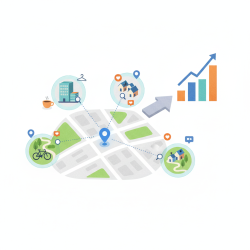
For many small businesses, their roots are deeply intertwined with the local community. This local presence fosters a different kind of proximity – one that builds community trust and support. Small businesses often participate in local events, sponsor local teams, and employ local residents, becoming an integral part of the fabric of the neighborhood. This connection creates a sense of shared values and mutual support, making customers more likely to choose a local business over an anonymous national chain.
Word-of-mouth marketing, particularly potent in local communities, becomes a powerful force. When a small business consistently delivers exceptional service and personalized experiences, satisfied customers become enthusiastic advocates. These organic recommendations are often far more influential than any large-scale advertising campaign, precisely because they come from trusted sources within the community. Being a known and respected entity within your local area dramatically enhances your reputation and customer base.
Effective Feedback Loops and Continuous Improvement
The direct relationship between a small business and its customers creates highly effective feedback loops. Customers feel comfortable providing honest feedback, knowing it will be heard directly by decision-makers. This candid input is an invaluable resource for continuous improvement. Unlike larger companies where feedback might get lost in various departments or filtered through multiple layers, a small business can act on customer suggestions and critiques almost immediately.
This immediate access to feedback allows small businesses to fine-tune their offerings, enhance their service delivery, and quickly rectify any shortcomings. The ability to pivot and adapt based on real-time customer insights ensures that the business remains highly relevant and truly customer-centric. This continuous cycle of listening, adapting, and improving solidifies customer loyalty and strengthens the business's market position.
- Direct communication channels facilitate open and honest feedback.
- Customer suggestions can be implemented rapidly due to lean organizational structures.
- Proximity allows for observing customer behavior and preferences firsthand.
- Improved offerings are a direct result of responsive engagement with client needs.
Summary
In conclusion, the power of proximity makes being a small business an immense asset when serving individual customers. This advantage stems from the ability to offer an unrivaled personal touch, fostering deep trust and understanding. Small businesses benefit from exceptional agility and responsiveness, enabling quick adaptation and bespoke solutions for unique customer needs. Furthermore, deep integration within the community builds strong local support and leverages powerful word-of-mouth recommendations. Finally, direct and effective feedback loops allow for continuous improvement, ensuring the business remains customer-centric and highly valued. Embracing these inherent strengths allows small businesses not just to compete, but to truly excel in the marketplace by cultivating lasting relationships with their individual clientele.
Comprehension questions
 What is the primary advantage a small business has over larger corporations when serving individual customers?How does a small business's agility contribute to better customer service and adaptation?In what ways does community integration benefit a small business's customer base?Why are effective feedback loops particularly strong in small business settings, and what is their impact?
Review Quiz
Next Lesson

Course Contents : Small Scale Marketing for Local Service Businesses
- >> 1.
 Leveraging Proximity for Unmatched Customer Service