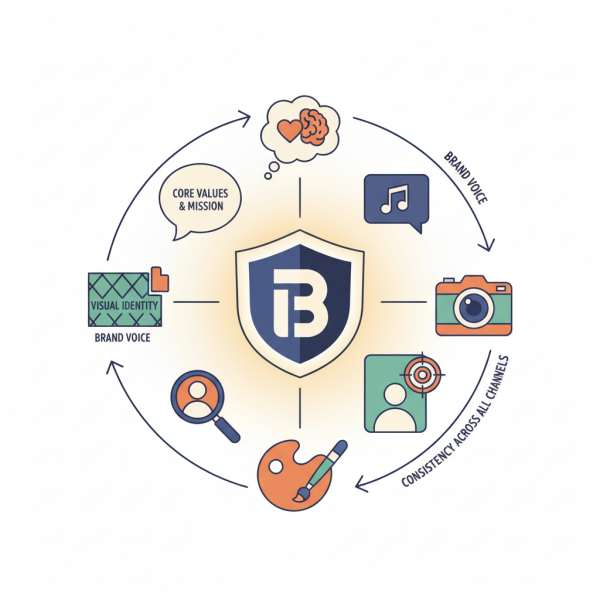
Crafting a Brand Identity
- -->> 3. Crafting a Brand Identity
What you'll learn
 Brand Voice DevelopmentVisual Identity CreationTarget Client UnderstandingConsistency in Branding
Businesses need to cultivate a distinctive presence that resonates deeply with their intended audience. This presence is known as brand identity, a multifaceted concept encompassing everything from your company's core values to its visual aesthetics and communication style. Developing a unique brand identity is a strategic imperative that goes beyond just a logo; it's about building a recognizable personality that fosters trust, loyalty, and immediate recognition among your target clientele.
Understanding Brand Identity
Brand identity is the comprehensive collection of all elements that a company uses to portray the right image to its consumers. It is how your brand looks, feels, and speaks to the world. It’s the sum of all sensory experiences your customers have with your business, forming a cohesive whole that differentiates you from competitors.
Why is a strong brand identity crucial? It builds recognition, fosters trust, communicates value, and ultimately drives purchasing decisions. Without a clear identity, businesses risk blending into the background, failing to capture the attention or loyalty of their desired customers. It serves as the foundation for all your marketing and communication efforts.
Defining Your Core Values and Mission
Before any creative work begins, it’s essential to look inward. What does your brand stand for? What problems does it solve? What are its fundamental beliefs and principles? These core values form the ethical and emotional bedrock of your brand, influencing every decision and message.
Your brand's mission statement clearly articulates its purpose and what it aims to achieve. This clarity helps to guide your brand's direction and ensures that all elements of your identity are aligned with your overarching goals. It’s about understanding your "why" before you articulate your "what" and "how."
Crafting Your Brand Voice
Your brand voice is the personality and emotion infused into all your written and spoken communications. It's how your brand sounds when it talks to your audience. Is it formal or casual? Playful or serious? Authoritative or approachable? Defining this voice ensures consistency across all platforms, from website copy to social media posts and customer service interactions.
Consistency in brand voice is paramount. A fluctuating voice can confuse your audience and dilute your brand's message, making it appear unreliable or inauthentic. A well-defined voice, however, strengthens your brand's personality and makes it more memorable.
Elements to consider when crafting your brand voice include:
- Tone: The emotional quality of your communication (e.g., inspiring, practical, friendly).
- Language: The specific words and phrases you use (e.g., industry jargon, simple terms, slang).
- Persona: The underlying character or archetype your brand embodies (e.g., mentor, innovator, friend).
- Grammar and Punctuation: Even these details contribute to the perceived professionalism or casualness of your brand.
Developing Your Visual Identity
While your brand voice provides the personality, your visual identity provides the face. It’s the collection of visual elements that communicate your brand's message without words. A strong visual identity creates an immediate impact and lasting impression, making your brand instantly recognizable.
The power of visuals cannot be overstated. From colors to typography, every visual element plays a critical role in evoking emotions and perceptions about your brand. These elements work together to create a distinctive aesthetic that differentiates your business.
Key visual elements include:
- Logo: The cornerstone of your visual identity, representing your brand in its simplest, most powerful form.
- Color Palette: Colors evoke specific emotions and associations. A consistent and thoughtfully chosen palette reinforces brand recognition and mood.
- Typography: The fonts you choose convey specific personality traits. Serif fonts often suggest tradition and sophistication, while sans-serif fonts can imply modernity and simplicity.
- Imagery Style: The type of photos, illustrations, or graphics you use should be consistent and reflect your brand's overall aesthetic and message.
Your logo should be unique, memorable, versatile, and timeless. It needs to look good across various applications, from a small favicon to a large billboard. Similarly, your color palette should be consistent across all brand assets, creating a unified and professional look.
Choosing the right typography involves selecting fonts that are legible, reflect your brand's personality, and work well together. Your imagery style dictates the visual storytelling of your brand, ensuring all visuals contribute to a cohesive narrative.
Knowing Your Target Client
A brand identity, no matter how creative, will fall flat if it doesn't resonate with the right people. Understanding your target client is therefore a fundamental step in crafting an effective brand identity. Who are you trying to reach? What are their demographics, psychographics, needs, desires, and pain points?
Thorough audience research allows you to tailor your brand voice and visual elements to appeal directly to your ideal customers. When your brand identity speaks directly to their experiences and aspirations, it creates a powerful emotional connection and fosters a sense of belonging. This resonance is what turns casual observers into loyal advocates.
Maintaining Consistency Across All Channels
Once your brand identity is established, the work isn't over. Consistency is the bedrock upon which strong brands are built. Every interaction a customer has with your brand—whether it’s seeing an advertisement, visiting your website, receiving an email, or engaging with your product packaging—should feel like it comes from the same cohesive entity.
This means applying your defined brand voice, visual guidelines, and core messaging uniformly across all marketing materials, digital platforms, customer service interactions, and product experiences. Creating comprehensive brand guidelines is crucial for ensuring that everyone involved in your business understands and adheres to the established identity standards.
Conclusion
Crafting a unique brand identity is an intricate yet indispensable process for any business aspiring to thrive. It begins with a deep dive into your core values and mission, progresses through the meticulous development of a distinct brand voice and compelling visual identity, and culminates in a profound understanding of your target clientele. By consistently applying these elements across all touchpoints, businesses can build a powerful, memorable, and resonant brand that not only stands out but also cultivates enduring loyalty and fosters meaningful connections in a crowded market.
Comprehension questions
 What are the two primary components of a strong brand identity discussed in the article?Why is understanding your brand's core values and mission essential before developing its identity?Name three specific elements that contribute to a brand's visual identity.According to the article, why is consistency across all channels crucial for a brand identity?
Community Poll
Next Lesson

Course Contents : Strategies for Small Cosmetic Businesses
- >> 3.
 Crafting a Brand Identity