Strategies for Scaling Your Services
- -->> 8. Strategies for Scaling Your Services
What you'll learn
 Strategic ExpansionTeam BuildingMarket DiversificationOperational Efficiency
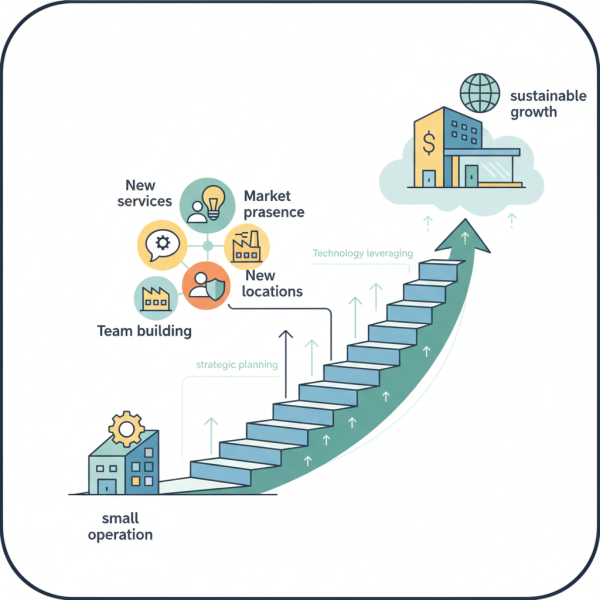
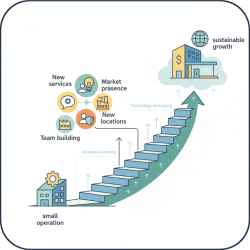
For any ambitious business, scaling is not just about getting bigger; it's about intelligent, sustainable growth that allows you to reach more customers, offer more value, and secure your place in the market. The transition from a small operation to a larger enterprise presents unique challenges and exciting opportunities. Successfully navigating this journey requires careful planning, strategic resource allocation, and a clear vision for the future. This article explores key strategies for expanding your service offerings, building an effective team, and establishing new physical locations, ensuring your business growth is both robust and manageable.
Strategic Planning for Sustainable Expansion
Before embarking on any expansion, a thorough strategic planning phase is essential. This involves understanding your current market position, identifying new opportunities, and setting clear, measurable goals. Conduct detailed market research to identify potential new customer segments, geographic areas, or unmet needs that your expanded services could address. A solid business plan for growth should include financial projections, a risk assessment, and contingency plans.
Define what success looks like for your scaling efforts. Is it increased revenue, market share, customer base, or a combination? Having specific objectives will guide your decisions and allow you to measure progress effectively. Evaluate your current operational capacity and identify any bottlenecks that might hinder growth before they become critical issues.
Expanding Your Service Offerings
Diversifying your service portfolio can be a powerful driver of growth, allowing you to capture a wider audience or increase your value proposition to existing clients. Consider services that complement your core offerings or address related pain points for your customers. This could involve adding premium tiers, creating new productized services, or developing subscription models.
Before a full launch, consider pilot programs for new services. Test them with a small segment of your most loyal customers to gather feedback and refine your approach. This iterative process helps ensure that new offerings meet market demand and integrate smoothly into your existing operations. Always maintain focus on quality and consistency across all services, new and old.
Building a High-Performing Team
Scaling a business inevitably means scaling your human capital. Hiring the right people is paramount to maintaining service quality and supporting growth. Clearly define the roles and responsibilities needed to support your expansion goals. Develop detailed job descriptions that attract candidates with the necessary skills and a strong cultural fit.
- Strategic Recruitment: Look beyond just technical skills; seek individuals who embody your company values and are adaptable, proactive, and committed to customer satisfaction. Utilize various recruitment channels to find diverse talent.
- Effective Onboarding: Implement a comprehensive onboarding process that quickly integrates new hires into your team and familiarizes them with your processes, culture, and expectations. This reduces ramp-up time and improves retention.
- Training and Development: Invest in continuous training for your staff. As your services evolve and your business grows, ensure your team has the skills and knowledge to meet new demands. Empower employees through delegation and provide opportunities for professional growth.
- Cultivating Culture: Maintain a strong, positive company culture that encourages collaboration, innovation, and accountability. A healthy culture is crucial for employee morale and retention, especially during periods of rapid change.
Opening New Locations
Physical expansion through new locations can significantly extend your market reach. This decision requires careful consideration of demographics, competition, accessibility, and local regulations. Conduct thorough feasibility studies for potential sites, analyzing projected customer traffic and operational costs.
Standardization is key when opening new locations. Develop clear operational manuals and training programs to ensure a consistent customer experience across all branches. Establish robust communication channels between headquarters and new locations to foster a unified business identity and streamline management. Logistical considerations, such as supply chain management and technology infrastructure, must also be meticulously planned.
Leveraging Technology for Efficiency
Technology plays a crucial role in enabling scalable growth. Automation of routine tasks frees up staff to focus on higher-value activities and customer engagement. Invest in robust CRM systems, project management tools, and communication platforms to streamline operations and improve internal and external interactions.
Data analytics can provide invaluable insights into customer behavior, operational performance, and market trends, informing your strategic decisions. Cloud-based solutions offer flexibility and scalability, reducing the need for significant upfront infrastructure investments. Embrace tools that can grow with your business and adapt to changing needs.
Maintaining Quality and Customer Satisfaction
As you scale, the challenge of maintaining consistent service quality intensifies. Develop standardized processes and quality control measures that can be replicated across new services, staff, and locations. Regularly solicit customer feedback through surveys, reviews, and direct interactions to identify areas for improvement.
Empower your front-line staff to resolve customer issues effectively and efficiently. A well-trained and supported team is your best asset in delivering exceptional customer experiences, even as your operations expand. Remember that satisfied customers are not only more likely to return but also become advocates for your growing brand.
Summary
Scaling your services and business is a multifaceted endeavor that demands a holistic approach. It begins with meticulous strategic planning, identifying opportunities for expanding service offerings, and carefully selecting new locations. Crucially, it involves building and nurturing a high-performing team capable of delivering consistent quality. Leveraging technology to enhance efficiency and maintaining an unwavering focus on customer satisfaction are also vital components. By integrating these strategies, businesses can achieve sustainable growth, navigate challenges effectively, and solidify their market presence for the long term.
Comprehension questions
 What are the key considerations for strategic planning before a business embarks on scaling?How can businesses effectively expand their service offerings while ensuring market demand and quality?What are the four key areas discussed for building a high-performing team to support business growth?Why is standardization important when opening new business locations, and what role does technology play in overall business scaling?
Review Quiz
Next Lesson
Course Contents : Strategies for Small Cosmetic Businesses
- >> 8.
 Strategies for Scaling Your Services