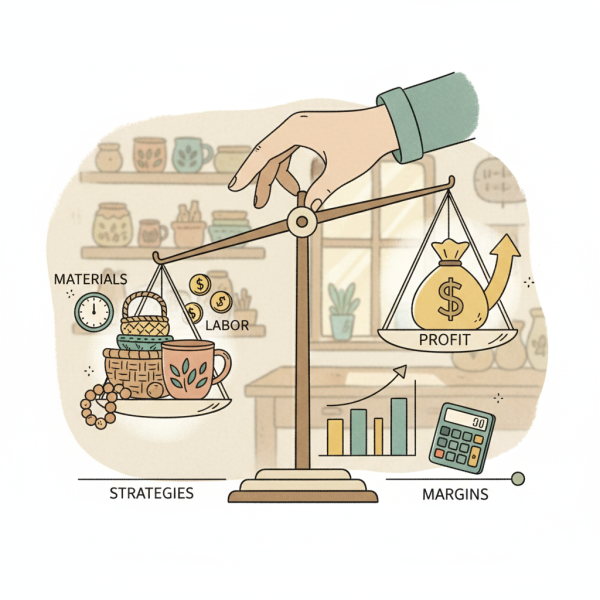
Strategic Pricing for Handmade Goods
- -->> 6. Strategic Pricing for Handmade Goods
What you'll learn
 Importance of Strategic PricingKey Components of Product CostCommon Pricing StrategiesCalculating Profit Margins
Pricing handmade goods can feel like a daunting task for many artisans. It's not just about covering your costs; it's about valuing your time, skill, and the unique appeal of your creations, while also ensuring your business remains profitable and sustainable. This lesson delves into effective pricing strategies and the crucial skill of calculating profit margins, empowering you to set prices confidently and grow your artisan venture.
Understanding the Importance of Strategic Pricing
Strategic pricing is more than just slapping a number on your product. It directly impacts your brand perception, market positioning, and ultimately, your financial success. Underprice your items, and you risk devaluing your work and struggling to cover expenses. Overprice, and you might alienate potential customers, leading to slow sales. Finding that sweet spot requires careful consideration of various factors.
Key Components of Your Product Cost
Before you can even think about profit, you must accurately understand the total cost of producing each item. This involves breaking down every expense associated with bringing your handmade good to life.
- Materials: This includes all raw materials, components, and even consumables like glue, paint, thread, or packaging materials. Be meticulous in tracking these costs for each specific product.
- Labor: Your time is valuable. Calculate the hourly rate you want to pay yourself (or your employees) and multiply it by the actual time spent designing, creating, assembling, and finishing each piece. Don't forget time spent on packaging.
- Overhead: These are the indirect costs of doing business that aren't tied to a specific product but are essential for operations. Examples include studio rent, utilities, marketing expenses, website fees, transaction fees, equipment maintenance, and administrative tasks. A portion of these costs must be allocated to each item you sell.
Common Pricing Strategies for Artisans
With your costs identified, you can now explore different strategies to determine your selling price. Often, a blend of these approaches works best.
- Cost-Plus Pricing: This is a straightforward method where you calculate your total production cost per item and then add a desired profit margin percentage. For example, if an item costs $20 to make and you want a 50% profit margin, your selling price would be $30 ($20 + 50% of $20). This ensures you always cover your costs and achieve a predetermined profit.
- Value-Based Pricing: This strategy focuses on the perceived value of your product to the customer rather than solely on your costs. What unique benefits does your item offer? Does it solve a problem, provide luxury, or offer exceptional craftsmanship? If customers perceive high value, they may be willing to pay a premium. This method requires a deep understanding of your target market.
- Competitive Pricing: This involves researching what similar handmade items are selling for in the market. While you shouldn't simply copy others, understanding your competitors' pricing can help you position your product effectively. You might price slightly lower, higher, or similar, depending on your brand, quality, and unique selling propositions.
- Tiered Pricing: Offering different versions of a product at various price points can cater to a broader audience. For instance, a basic version, a deluxe version with extra features, and a premium version with custom options. This allows customers to choose based on their budget and needs.
Calculating Profit Margins
Understanding profit margins is crucial for assessing your business's financial health and making informed decisions. There are two primary types of profit margins to consider:
Gross Profit Margin: This measures the profitability of your products before deducting operating expenses. It's calculated as (Revenue - Cost of Goods Sold) / Revenue. For handmade goods, the Cost of Goods Sold (COGS) typically includes materials and direct labor.
Net Profit Margin: This provides a comprehensive view of your overall business profitability after all expenses, including operating costs (overhead, marketing, etc.), have been deducted. It's calculated as (Net Profit / Revenue). A healthy net profit margin indicates efficient cost management and effective pricing.
Pricing for Wholesale vs. Retail
If you plan to sell your goods to other businesses for resale (wholesale), your pricing structure will differ significantly from direct-to-consumer (retail) sales. Wholesale prices are typically 50% of your retail price or less, to allow the retailer sufficient margin to cover their costs and make a profit. It's vital to ensure your wholesale price still covers your production costs and allows for a reasonable profit margin, even if it's smaller than your retail margin. This often means your retail price needs to be robust enough to support both channels.
Dynamic Pricing and Adjustments
Pricing isn't a set-it-and-forget-it task. Market conditions, material costs, labor rates, and even your brand's growth can change. Regularly review your pricing strategies. Are you hitting your profit targets? Is demand increasing or decreasing? Don't be afraid to make adjustments as your business evolves and you gain more experience and data.
Summary
Mastering pricing for handmade goods involves a clear understanding of all your costs, thoughtful application of various pricing strategies, and diligent calculation of profit margins. By meticulously accounting for materials, labor, and overhead, and then applying methods like cost-plus, value-based, or competitive pricing, artisans can confidently set prices that reflect their worth, attract customers, and ensure the long-term viability of their creative businesses. Regular review and adaptation of your pricing approach are key to sustained success.
Comprehension questions
 What are the three key components of product cost that artisans must consider for their handmade goods?Describe two common pricing strategies mentioned for artisans, and explain their main focus.What is the primary difference between Gross Profit Margin and Net Profit Margin, and what does each measure?Why is it important for artisans to regularly review and adjust their pricing strategies?
Review Quiz
Next Lesson

Course Contents : Building Your Custom Jewelry Business
- >> 6.
 Strategic Pricing for Handmade Goods