Design Principles and Prototyping for Unique Jewelry
- -->> 3. Design Principles and Prototyping for Unique Jewelry
What you'll learn
 Design Principles in JewelryPrototyping TechniquesIterative Design ProcessAchieving Jewelry Uniqueness
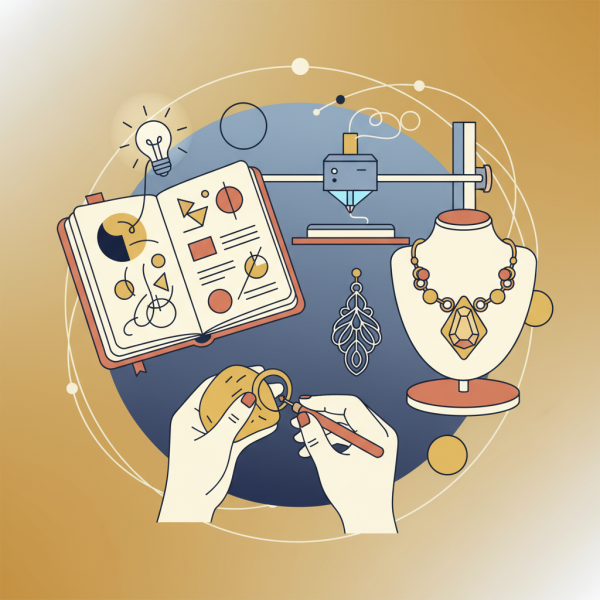
Embarking on the journey of creating unique jewelry is an exciting endeavor that transcends mere crafting; it demands a deep understanding of design principles and the practical application of prototyping. This lesson delves into the critical elements that transform a simple concept into a breathtaking, one-of-a-kind piece, emphasizing how foundational artistic rules combined with experimental modeling can unlock unparalleled creative potential for jewelers at any level.
The Cornerstone: Fundamental Design Principles
Understanding and applying core design principles is paramount to crafting jewelry that is not only visually appealing but also harmonious and impactful. These principles serve as a guide, ensuring that each component contributes to the overall aesthetic and message of the piece.
- Balance: This refers to the visual weight of elements within a design. Symmetrical balance offers a sense of formality and stability, with elements evenly distributed. Asymmetrical balance, while less formal, creates dynamic tension and interest by balancing dissimilar elements, such as a large bold stone offset by several smaller, lighter elements.
- Emphasis: Every unique jewelry piece benefits from a focal point, an element that immediately captures the viewer's attention. This can be achieved through size, color contrast, texture, or intricate detail. The surrounding elements should then complement and draw the eye towards this central feature without competing with it.
- Rhythm and Movement: Rhythm in design is about creating a sense of organized movement, guiding the eye through the piece. This can be achieved through repetition of shapes, colors, or textures, or through a progression where elements gradually change in size or intensity, leading the viewer's gaze from one point to another.
- Proportion and Scale: These principles relate to the size relationships of elements within a piece and their relationship to the wearer. Good proportion ensures that components look right together, while appropriate scale ensures the piece suits the body part it adorns, enhancing rather than overpowering it.
- Unity and Harmony: The ultimate goal of applying design principles is to achieve unity and harmony. This means all elements work together cohesively, creating a sense of completeness and belonging. A unified piece feels intentional and well-thought-out, where no single element feels out of place.
- Contrast: The use of contrast, whether in color, texture, shape, or size, adds visual interest and prevents a design from appearing monotonous. Juxtaposing smooth surfaces with rough ones, or bright colors with muted tones, can create dramatic and engaging effects.
From Concept to Tangible: The Art of Prototyping
Prototyping is the crucial stage where abstract design concepts transform into tangible forms. It allows designers to test ideas, visualize scale, and refine details before committing to expensive materials and intricate production processes. This iterative process is indispensable for ensuring the final piece meets the designer's vision and standards of quality.
Early-stage prototyping can involve simple sketches or paper cutouts to explore overall shape and flow. As ideas solidify, more sophisticated methods come into play.
- Wax Carving: A traditional and highly versatile method, wax carving allows for intricate detail and organic forms. Jewelers can sculpt wax models that are exact replicas of the intended final metal piece, which are then used for casting. This provides excellent tactile feedback on form and balance.
- Metal Clay: A modern alternative, metal clay (such as silver clay or bronze clay) can be molded, sculpted, and textured much like ceramic clay. Once fired, it transforms into solid metal, offering a relatively quick way to create and test designs, especially for pieces with fine details or textures.
- 3D Printing: Leveraging digital design, 3D printing offers unparalleled precision and the ability to create complex geometries that would be difficult or impossible by hand. Designers create CAD (Computer-Aided Design) models, which are then printed in resin or wax, providing highly accurate prototypes ready for investment casting or direct wearing.
- Base Metal Fabrication: For some designs, creating a prototype in a less expensive base metal like copper or brass can be beneficial. This allows for testing construction methods, joint placements, and overall wearability without the cost implications of precious metals.
Each prototyping method offers distinct advantages, and often a combination of techniques is employed to fully explore and validate a design.
The Iterative Dance: Refinement and Feedback
Prototyping is rarely a one-step process. It's an iterative dance of creation, evaluation, and refinement. Once a prototype is made, it must be critically assessed. Does it sit correctly? Is it comfortable? Are the proportions pleasing? Does it achieve the intended aesthetic impact?
Seeking feedback from peers, mentors, or even potential wearers is invaluable at this stage. Fresh eyes can spot issues or suggest improvements that a designer, deeply immersed in the project, might overlook. This feedback loop is essential for identifying weaknesses, confirming strengths, and making necessary adjustments to the design. This could involve modifying dimensions, altering stone settings, or even completely redesigning certain elements until the prototype perfectly embodies the desired outcome.
Crafting Uniqueness: Beyond the Principles
While design principles provide a robust framework, true uniqueness in jewelry emerges from a designer's personal vision and their ability to infuse a piece with individuality. This means developing a signature style, exploring unconventional materials, or drawing inspiration from unexpected sources.
Consider the narrative behind each piece. What story does it tell? How does it connect with the wearer? Infusing personal meaning or a unique conceptual hook can elevate a design from merely beautiful to truly unforgettable. Experimentation, a willingness to break conventions thoughtfully, and a constant pursuit of innovative techniques are all vital in carving out a distinctive niche in the world of jewelry design.
Summary
This lesson underscored the symbiotic relationship between foundational design principles and the practical art of prototyping in creating unique jewelry. We explored essential principles such as balance, emphasis, rhythm, proportion, unity, and contrast, highlighting how these artistic guidelines shape a compelling aesthetic. Furthermore, we examined various prototyping methods, including wax carving, metal clay, 3D printing, and base metal fabrication, detailing how these techniques enable designers to test, refine, and perfect their concepts before final production. The iterative process of refinement, incorporating critical feedback, and the ultimate pursuit of personal vision were emphasized as crucial steps in transforming an initial idea into a truly one-of-a-kind jewelry piece.
Comprehension questions
 What are the six core design principles discussed in the article that are paramount for crafting visually appealing jewelry?Name at least three different prototyping methods described, and explain a benefit of each in jewelry design.Why is the iterative process of refinement and feedback considered indispensable in prototyping unique jewelry pieces?Beyond applying design principles, what does the article suggest is key to achieving true uniqueness and a signature style in jewelry design?
Review Quiz
Next Lesson
Course Contents : Building Your Custom Jewelry Business
- >> 3.
 Design Principles and Prototyping for Unique Jewelry