Validating Your Jewelry Niche and Identifying Your Target Audience
- -->> 1. Validating Your Jewelry Niche and Identifying Your Target Audience
What you'll learn
 Niche definition and benefitsMethods for market validationTarget audience identificationConnecting niche and audience
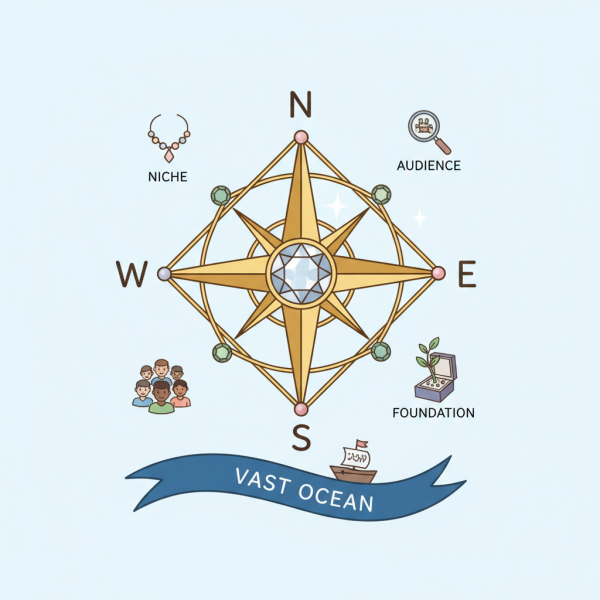
Starting a jewelry business, or revitalizing an existing one, can feel like navigating a vast ocean of possibilities. Without a clear destination, you risk drifting aimlessly. The most crucial first step, often overlooked in the excitement of creation, is meticulously validating your chosen jewelry niche and unequivocally identifying your target audience. This foundational work isn't just about making informed decisions; it's about building a robust, sustainable, and profitable enterprise from the ground up, ensuring your beautiful creations find the appreciative homes they deserve.
What is a Jewelry Niche and Why Does It Matter?
A jewelry niche refers to a specialized segment of the broader jewelry market that focuses on a particular type of product, style, material, occasion, or target customer. Instead of trying to appeal to everyone, a niche allows you to cater to a specific, often underserved, group with unique preferences. This strategic focus is paramount for several reasons:
- Reduced Competition: Operating in a niche often means facing fewer direct competitors compared to the general jewelry market, making it easier to stand out.
- Clearer Marketing: When you know precisely who you’re talking to, your marketing messages become more precise, effective, and cost-efficient.
- Higher Perceived Value: Specialization can position you as an expert in your chosen area, allowing you to command premium prices.
- Easier Inventory Management: A focused product range simplifies sourcing materials, production, and stock control.
- Stronger Brand Identity: A distinct niche helps you build a unique and memorable brand identity that resonates deeply with your ideal customers.
Examples of niches include ethically sourced minimalist gold jewelry, handcrafted sterling silver pieces inspired by nature, personalized pet memorial jewelry, or avant-garde statement pieces for fashion-forward individuals.
The Indispensable Importance of Niche Validation
Before investing significant time, money, and creative energy into producing a full line of jewelry, you must validate your niche. Validation is the process of confirming that there is genuine market demand for your specific jewelry offering and that your chosen audience is willing to purchase it. Skipping this step is akin to building a house without checking if the land is stable; it’s a recipe for potential collapse. Validation mitigates risk by:
- Confirming Market Need: It verifies that a sufficient number of people are actively seeking what you plan to offer.
- Preventing Wasted Resources: You avoid spending valuable resources on products or marketing strategies that won't resonate.
- Gauging Willingness to Pay: It helps you understand the price points your target audience is comfortable with, informing your pricing strategy.
- Refining Your Offering: Feedback gathered during validation can help you tweak your designs, materials, and overall value proposition to better meet customer expectations.
Effective Methods for Niche Validation
Several practical methods can be employed to validate your jewelry niche:
Market Research and Direct Engagement
Engaging directly with potential customers is invaluable. Conduct surveys using online tools like SurveyMonkey or Google Forms, asking about their preferences, purchasing habits, and pain points related to jewelry. Perform one-on-one interviews with individuals who fit your demographic, delving deeper into their desires. Participate in online forums, social media groups, or local craft markets to observe conversations and gather informal feedback.
Competitor Analysis
Research existing jewelry businesses, both large and small, that operate in or near your proposed niche. Analyze what they offer, their pricing, their marketing language, and their customer reviews. Identify gaps in their offerings or areas where you could provide a superior product or experience. Understanding your competition helps you carve out your unique selling proposition.
Trend Analysis
Stay informed about broader fashion, design, and consumer trends. Look at industry reports, fashion magazines, and trend forecasting websites (e.g., WGSN). Are people gravitating towards sustainable materials, personalized items, or specific aesthetic movements? Aligning your niche with emerging trends can provide a significant advantage, but remember to validate the specific application within your niche.
Minimum Viable Product (MVP) Testing
Instead of launching a complete collection, create a small, basic version of your jewelry offering – an MVP. This could be a limited number of designs, or even high-quality mock-ups. Launch these with a soft opening, perhaps through a pre-order campaign, a pop-up shop, or a small online store. Monitor sales, gather feedback, and iterate based on real-world market response before scaling up production.
Identifying Your Target Audience: Who Are You Designing For?
Once you have a validated niche, the next step is to deeply understand the individuals within that niche – your target audience. Moving beyond general assumptions requires a detailed examination of several factors:
Demographics
These are quantifiable characteristics of your audience. Consider their age range, gender identity, income level, geographic location, occupation, education, and family status. For instance, are you targeting young professionals in urban areas, or stay-at-home parents in suburban communities?
Psychographics
This delves into the psychological aspects. What are their lifestyles, values, interests, opinions, and personality traits? Are they environmentally conscious, value luxury, seek unique self-expression, or prefer classic elegance? Understanding their motivations helps you connect on a deeper emotional level.
Behavioral Data
How do they behave as consumers? What are their purchasing habits? Do they shop online, in boutiques, or at craft fairs? Are they impulsive buyers or do they research extensively? What are their preferred social media platforms? Are they loyal to certain brands or always seeking novelty?
Creating Buyer Personas
Synthesize all this information into detailed buyer personas. Give each persona a name, a backstory, a job, hobbies, pain points related to jewelry, and aspirations. For example, "Eco-Conscious Emily" might be a 32-year-old marketing manager who values sustainability and seeks unique, handcrafted pieces that tell a story, preferring to shop from small, ethical businesses online. These personas bring your audience to life and make marketing decisions much clearer.
Connecting Your Niche with Your Audience
Your validated niche and clearly defined target audience are two sides of the same coin. Your niche dictates what specific jewelry you create, while your audience dictates who you create it for and how you communicate its value. A well-defined niche naturally attracts a specific audience, and a deep understanding of that audience helps you further refine your niche and tailor every aspect of your business.
From the design aesthetic and material choices to your pricing strategy, brand voice, marketing channels, and customer service approach, every decision should be made with your target audience and validated niche in mind. This synergy ensures that your jewelry not only stands out but also deeply resonates with the people who are most likely to cherish it.
Summary
In conclusion, the journey to a thriving jewelry business begins not with a sketchpad, but with thorough market analysis. Validating your jewelry niche ensures that there is a genuine and profitable demand for your unique creations, saving you from investing in a market that doesn't exist for your specific offering. Simultaneously, identifying and deeply understanding your target audience through demographics, psychographics, and behavioral data allows you to craft compelling products and marketing messages that genuinely connect. By meticulously completing these foundational steps, you establish a clear path forward, significantly increasing your chances of building a successful and sustainable jewelry brand.
Comprehension questions
 What are three key benefits of operating within a well-defined jewelry niche?Why is niche validation considered an indispensable step before launching a jewelry business?Describe two effective methods for validating a jewelry niche before committing significant resources.Beyond demographics, what other aspects are crucial for deeply understanding your target audience, and how can they be synthesized?
Community Poll
Next Lesson

Course Contents : Building Your Custom Jewelry Business
- >> 1.
 Validating Your Jewelry Niche and Identifying Your Target Audience