Navigating Your Accounting Method Choice
- -->> 3. Navigating Your Accounting Method Choice
What you'll learn
 Cash Basis AccountingAccrual Basis AccountingFinancial Reporting ImpactChoosing an Accounting Method
One of the foundational decisions any business owner must make, particularly when establishing or re-evaluating their financial processes, is selecting an accounting method. This choice, primarily between cash basis and accrual basis accounting, dictates how and when your business recognizes revenue and expenses. Far from being a mere administrative detail, this decision profoundly impacts your financial statements, tax obligations, and the overall understanding of your company's economic performance. Understanding the nuances of each method is vital for accurate reporting and strategic financial management.
Understanding Accounting Methods
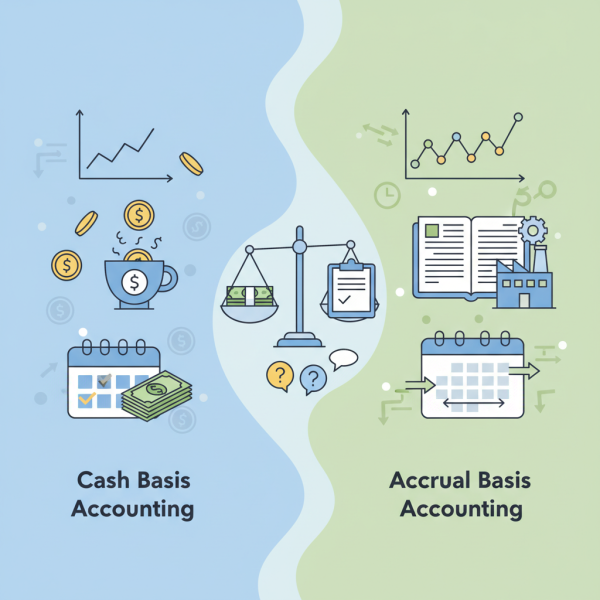
At its core, an accounting method is the set of rules your business follows to record revenues and expenses. The key differentiator between the two main methods lies in the timing of these recordings relative to the actual movement of cash. This timing difference creates distinct financial pictures and can have significant implications for how your business is perceived by stakeholders, lenders, and tax authorities.
Cash Basis Accounting
Cash basis accounting is often championed for its simplicity and directness. Under this method, transactions are recorded only when cash actually changes hands. This means:
- Revenue is recognized when cash is received from customers.
- Expenses are recognized when cash is paid out to vendors or employees.
For example, if you send an invoice to a client in December but don't receive payment until January, under cash basis accounting, that revenue would be recorded in January. Similarly, if you receive a utility bill in March but pay it in April, the expense is recorded in April.
Advantages of Cash Basis Accounting:
- Simplicity: It's straightforward to understand and implement, requiring less complex bookkeeping.
- Clear Cash Flow: It provides an immediate and clear picture of the actual cash available in the business, which can be useful for day-to-day liquidity management.
- Tax Deferral Potential: For certain businesses, it might allow for deferring taxable income to the next fiscal year by delaying invoicing or accelerating payments.
Disadvantages of Cash Basis Accounting:
- Inaccurate Profitability: It doesn't match revenues with the expenses incurred to generate those revenues, potentially distorting the true profitability of a period.
- Not GAAP Compliant: Generally Accepted Accounting Principles (GAAP) do not permit cash basis accounting for most larger or publicly traded companies.
- Misleading Financial Picture: It can fail to account for outstanding receivables or payables, giving a less comprehensive view of the company's financial health.
Cash basis accounting is typically suitable for very small businesses, sole proprietorships, or those without significant inventory, and often for businesses whose annual gross receipts are below a certain threshold (e.g., $29 million for many U.S. businesses in 2023 for tax purposes).
Accrual Basis Accounting
Accrual basis accounting is widely considered to provide a more accurate and comprehensive view of a company's financial performance. It adheres to the matching principle, meaning revenues are matched with the expenses incurred to generate them, regardless of when cash is exchanged. Under this method:
- Revenue is recognized when it is earned, typically when goods are delivered or services are rendered, even if payment has not yet been received.
- Expenses are recognized when they are incurred, such as when a service is used or an item is consumed, even if payment has not yet been made.
Using the previous example, if you send an invoice in December and perform the service, under accrual basis, the revenue is recorded in December, even if payment arrives in January. The utility bill received in March for services rendered in March would be expensed in March, regardless of its April payment date.
Advantages of Accrual Basis Accounting:
- Accurate Financial Performance: It provides a truer measure of profitability by matching revenues to the expenses that produced them.
- GAAP Compliant: It is the standard accounting method required by GAAP and is mandated for most corporations, businesses with inventory, or those exceeding certain revenue thresholds.
- Comprehensive Financial Picture: It accounts for accounts receivable, accounts payable, unearned revenue, and prepaid expenses, offering a more complete balance sheet.
- Better for Long-Term Planning: Its comprehensive nature makes it superior for internal decision-making, budgeting, and external reporting to investors or lenders.
Disadvantages of Accrual Basis Accounting:
- Complexity: It involves more intricate bookkeeping, requiring tracking of non-cash transactions like receivables and payables.
- Less Clear Cash Position: The profit shown on an accrual income statement does not necessarily reflect the cash available in the bank, potentially requiring additional cash flow statements for liquidity analysis.
Accrual basis accounting is mandatory for most larger businesses, any business that holds inventory, and those seeking external financing or wanting to go public. It offers a standardized and detailed approach to financial reporting.
Key Differences and Impact on Reporting
The choice of accounting method fundamentally alters how your financial statements portray your business:
- Revenue and Expense Recognition: This is the most significant difference, affecting when income and expenses appear on your income statement. Cash basis only sees transactions with cash movement; accrual basis records them when earned or incurred.
- Income Statement: Your net income can vary significantly between the two methods for the same period, especially for businesses with fluctuating receivables and payables. Accrual generally provides a more consistent trend of profitability over time.
- Balance Sheet: Accrual accounting includes current assets like accounts receivable (money owed to you) and current liabilities like accounts payable (money you owe), along with prepaid expenses and unearned revenues. The cash basis balance sheet lacks these vital components, giving a less complete picture of financial position.
- Tax Implications: The timing of revenue and expense recognition directly impacts when income is reported to tax authorities, which can affect your tax liability in a given year. While the total tax over time might be similar, the timing can be crucial for cash flow management.
- Financial Analysis: External parties, such as banks and investors, almost universally prefer accrual-based financial statements because they offer a more reliable and standardized view of a company's financial health and operational performance.
Making the Right Choice
Choosing between cash and accrual accounting is not a one-size-fits-all decision. Several factors should guide your selection:
- Business Size and Legal Structure: Small businesses and sole proprietorships often start with cash basis due to its simplicity. As businesses grow, especially if they incorporate or exceed certain revenue thresholds, accrual becomes mandatory.
- Inventory: If your business buys and sells inventory, the IRS and GAAP typically require the use of accrual accounting to properly match the cost of goods sold with the revenue generated from their sale.
- Industry Standards: Certain industries may have prevailing accounting practices that favor one method over the other.
- Future Growth and Financing Needs: If you plan to seek loans, attract investors, or eventually go public, accrual accounting is essential as it provides the detailed and transparent financial reporting required by these external stakeholders.
- Tax Implications: Consult with a tax professional to understand how each method will impact your tax obligations and whether you meet the criteria for certain exemptions.
- Management Needs: Consider which method gives you the clearest insights for managing your business operations and making strategic decisions.
Summary
The choice between cash basis and accrual basis accounting is a critical decision that underpins a company's financial reporting framework. Cash basis accounting offers simplicity and a direct view of cash flow, making it suitable for smaller, less complex entities. In contrast, accrual basis accounting provides a more comprehensive and accurate picture of financial performance by matching revenues and expenses, aligning with GAAP, and is generally mandated for larger businesses or those with inventory. The chosen method significantly influences income statements, balance sheets, tax reporting, and how external parties assess your business's viability. Thoughtful consideration of your business's size, inventory, growth trajectory, and external reporting requirements is paramount in making an informed selection that supports both operational efficiency and strategic financial planning.
Comprehension questions
 What is the primary difference in revenue recognition between cash and accrual accounting?For what type of businesses is cash basis accounting generally more suitable?Why is accrual basis accounting often considered to provide a more accurate picture of a company's financial performance?List three factors a business should consider when deciding which accounting method to adopt.
Review Quiz
Next Lesson
Course Contents : The Vital Importance of Keeping Good Records for Small Businesses
- >> 3.
 Navigating Your Accounting Method Choice