From Skilled Worker to Business Leader
- -->> 1. From Skilled Worker to Business Leader
What you'll learn
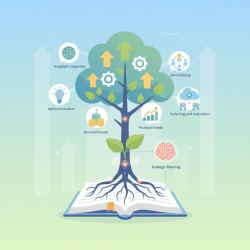
 Mental ShiftRisk ManagementStrategic PlanningFinancial Literacy
The journey from being a skilled worker to a successful business owner is often perceived as a leap of faith, but fundamentally, it is a profound mental transformation. It requires more than just acquiring new skills; it demands a complete overhaul of one's perspective, priorities, and approach to challenges. This shift involves moving away from the security and defined roles of employment towards embracing uncertainty, taking calculated risks, and cultivating an autonomous vision. Understanding and actively developing this entrepreneurial mindset is the cornerstone for anyone aspiring to build their own enterprise.
The Fundamental Shift
As a skilled worker, your primary focus is often on executing tasks, mastering specific responsibilities, and contributing to a larger organizational goal set by others. Your success is typically measured by your efficiency, quality of work, and ability to follow established procedures. The entrepreneurial journey, however, flips this dynamic entirely.
You are no longer just an executor; you become the visionary, the strategist, and the ultimate decision-maker. The mental shift involves transitioning from a task-oriented approach to a holistic, future-oriented one. Instead of asking "What is my next task?" you must ask "What is the next strategic move for my business?" This demands a broader understanding of market dynamics, customer needs, and the overall health and direction of your venture.
Embracing Risk and Uncertainty
One of the most significant differences between being an employee and an entrepreneur is the relationship with risk. Employees often enjoy the security of a regular paycheck and a clear career path. Entrepreneurs, conversely, operate in an environment of constant uncertainty, where income can fluctuate, and every decision carries potential implications for their business's survival.
Embracing risk doesn't mean being reckless; it means developing an ability to assess, mitigate, and navigate uncertainty. It's about taking calculated chances, learning from failures, and adapting quickly. This requires a strong stomach for ambiguity and the confidence to make decisions with imperfect information.
- Assess potential downsides before committing resources.
- Develop contingency plans for various scenarios.
- Start small and iterate to minimize large-scale losses.
- Seek advice from experienced mentors to gain perspective.
Developing a Vision and Strategy
An employee typically works within a predefined framework, contributing to someone else's vision. A successful entrepreneur, however, must be the architect of their own vision and the strategist behind its execution. This involves clearly defining what you want to achieve, identifying your target market, understanding your unique value proposition, and mapping out the steps to get there.
This mental shift moves from following a path to paving one. It requires foresight, creativity, and the ability to articulate a compelling future that inspires both yourself and potential team members or investors. Without a clear vision and a robust strategy, an entrepreneurial venture can quickly lose direction and momentum.
Cultivating Resilience and Adaptability
The path of entrepreneurship is rarely smooth. Setbacks, failures, and unexpected challenges are not just possibilities; they are inevitabilities. Where a skilled worker might face specific project failures, an entrepreneur faces potential business-ending obstacles. The ability to bounce back from adversity, learn from mistakes, and pivot when necessary is paramount.
Resilience is the mental fortitude to persevere despite difficulties, maintaining focus and optimism. Adaptability is the capacity to adjust strategies, products, or services in response to market changes or new information. These qualities are nurtured by a growth mindset, viewing challenges not as roadblocks but as opportunities for learning and innovation.
- View challenges as learning opportunities, not personal failures.
- Maintain a positive outlook, focusing on progress over perfection.
- Build a strong support network of peers, mentors, and advisors.
- Practice self-care to manage stress and prevent burnout.
Financial Acumen Beyond a Paycheck
For a skilled worker, financial understanding often revolves around managing a personal budget and understanding their salary, benefits, and deductions. For an entrepreneur, financial acumen expands dramatically to encompass the entire financial health of a business. This includes understanding profit and loss statements, cash flow management, balance sheets, funding options, pricing strategies, and investment decisions.
This mental shift means moving from being a recipient of income to a steward of capital. Every business decision has a financial implication, and a deep understanding of these dynamics is crucial for sustainability and growth. It's about making money, managing money, and making money work for the business, not just for personal consumption.
Summary
Transitioning from a skilled worker to a business owner is a transformative journey that extends far beyond just starting a company. It demands a fundamental mental shift encompassing the embrace of risk and uncertainty, the development of a compelling vision and strategic roadmap, the cultivation of unwavering resilience and adaptability, and the acquisition of comprehensive financial acumen. Mastering these psychological and practical changes is what truly unlocks the potential for entrepreneurial success and the satisfaction of building something of your own.
Comprehension questions
 What is the primary mental shift required when transitioning from a skilled worker to a business owner?Name two key aspects of embracing risk and uncertainty that are crucial for entrepreneurs.Why is developing a strong vision and strategy more important for a business owner than for an employee?How does an entrepreneurial mindset view setbacks, and what role does adaptability play?
Community Poll
Next Lesson
Course Contents : Business Management Guide for Construction Entrepreneurs
- >> 1.
 From Skilled Worker to Business Leader