Legal Structures for a Construction Business
- -->> 2. Legal Structures for a Construction Business
What you'll learn
 Introduction to Legal Structures and Business RegistrationUnderstanding Business EntitiesSole Proprietorship and Partnership StructuresLimited Liability Company and Corporation Structures
Embarking on the journey of starting a construction company involves more than just acquiring tools and securing projects; it necessitates a thorough understanding of legal structures and proper business registration. The choice of business entity significantly impacts your company's liability, taxation, administrative burden, and future growth potential. Navigating these initial legal steps correctly is crucial for establishing a solid foundation, ensuring compliance with state and federal regulations, and protecting your personal assets from business liabilities. This guide will walk you through the various business structures available and outline the essential steps to legally register your construction venture.
Understanding Business Entities
Choosing the right legal structure is one of the most critical decisions for a new construction company. Each option offers distinct advantages and disadvantages regarding personal liability, taxation, and operational complexity.
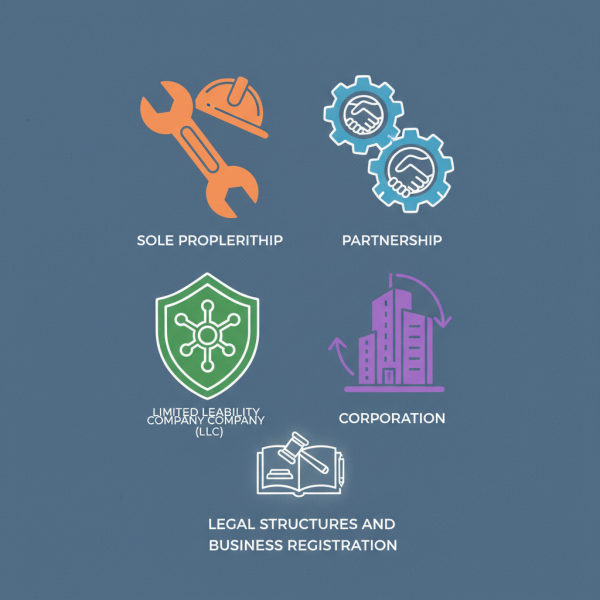
Sole Proprietorship
This is the simplest and most common form of business, especially for individual contractors. It's easy to set up, requiring minimal paperwork and no distinction between the owner and the business for legal and tax purposes. However, this simplicity comes at a cost: the owner has unlimited personal liability for all business debts and obligations, meaning personal assets are at risk.
Partnership
A partnership involves two or more individuals who agree to share in the profits or losses of a business. Partnerships can be General Partnerships (GPs) where all partners have unlimited liability and management responsibilities, or Limited Partnerships (LPs) and Limited Liability Partnerships (LLPs) which offer some partners limited liability but often require a general partner with unlimited liability. A comprehensive partnership agreement is vital for defining roles, responsibilities, and profit distribution.
Limited Liability Company (LLC)
An LLC combines the liability protection of a corporation with the pass-through taxation and flexibility of a partnership or sole proprietorship. Owners (members) are typically protected from personal liability for business debts and lawsuits, meaning only the company's assets are at risk. This structure is highly popular among small to medium-sized construction businesses due to its balance of protection and administrative ease.
Corporation (C-Corp and S-Corp)
A corporation is a legal entity separate and distinct from its owners (shareholders). This structure offers the strongest personal liability protection, as shareholders are generally not personally responsible for the corporation's debts or liabilities. Corporations are more complex to form and maintain, requiring extensive paperwork, regular board meetings, and strict regulatory compliance.
Comprehension questions
 What are the main factors to consider when choosing a legal structure for a new construction company?What is the primary disadvantage of a sole proprietorship regarding personal assets?How does an LLC balance liability protection with administrative ease, making it popular for small to medium construction businesses?What is the key distinction in taxation between a C-Corporation and other business entities mentioned in the article?
Review Quiz
Next Lesson

Course Contents : Business Management Guide for Construction Entrepreneurs
- >> 2.
 Legal Structures for a Construction Business