Essential Technology Tools for Today's Contractors
- -->> 11. Essential Technology Tools for Today's Contractors
What you'll learn
 Project Management StreamliningDigital Communication & CollaborationOn-Site Efficiency with Mobile ToolsFinancial & Planning Technology
Modern construction demands efficiency, precision, and seamless collaboration. Gone are the days when paper plans and manual processes were sufficient. Today's contractors are leveraging a diverse array of technology tools and digital solutions to not only meet but exceed project demands, streamline operations, and enhance overall productivity. Embracing these innovations is no longer an option but a necessity for staying competitive and profitable in a rapidly evolving industry.
Project Management Software: The Command Center
At the heart of modern construction operations lies robust project management software. These platforms serve as central hubs, providing contractors with an integrated view of all ongoing projects. They consolidate crucial information, tasks, and schedules into a single accessible location, moving far beyond simple Gantt charts.
Key functionalities often include detailed scheduling, resource allocation, task assignment, progress tracking, and comprehensive document management. This centralization drastically improves coordination among teams, subcontractors, and clients. It helps in identifying potential bottlenecks early, reducing delays, and enabling proactive decision-making throughout the project lifecycle.
By streamlining workflows and providing real-time data, project management software ensures that everyone involved is working with the most current information, minimizing errors and rework. Popular examples in the industry include Procore, Autodesk Construction Cloud, and CoConstruct, each offering unique features tailored to various contractor needs.
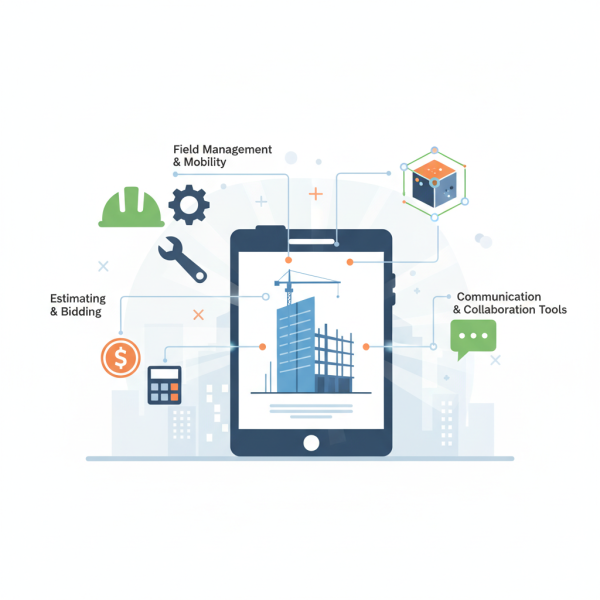
Communication & Collaboration Tools: Bridging the Gaps
Effective communication is the lifeblood of any construction project, yet it often presents significant challenges. Misunderstandings, delayed information, and fragmented communication channels can lead to costly errors and project slowdowns. Technology offers powerful solutions to overcome these hurdles.
Instant messaging platforms like Slack or Microsoft Teams, alongside dedicated construction communication apps, enable real-time updates and discussions. Video conferencing facilitates virtual meetings, reducing the need for travel and bringing remote team members together instantly. Shared digital whiteboards and annotation tools allow for collaborative review of plans and documents.
These tools foster transparent and efficient communication, ensuring that field teams, office staff, and stakeholders remain constantly connected. Quick problem resolution, clear directives, and a reduction in misinterpretations are direct benefits, leading to smoother project execution and stronger team cohesion.
Estimating & Bidding Software: Precision and Speed
The accuracy and speed of bids are paramount for winning new contracts. Manual estimating processes are often time-consuming, prone to human error, and struggle to keep pace with market fluctuations. Digital estimating and bidding software transforms this critical function.
These applications automate complex calculations, perform precise material take-offs from digital plans, and integrate with vast cost databases to ensure up-to-date pricing. They allow contractors to generate detailed, accurate estimates much faster than traditional methods, enhancing competitiveness.
Furthermore, many solutions offer bid management features, helping contractors track bid statuses, manage multiple proposals, and analyze historical data to refine future bids. This not only saves significant time but also significantly improves the consistency and reliability of every proposal submitted, directly impacting a contractor's bottom line.
Field Management & Mobility Solutions: On-Site Efficiency
The construction site is where the rubber meets the road, and mobile technology has revolutionized how work is managed in the field. Field management solutions empower site superintendents, foremen, and crew members with instant access to critical project information directly from their smartphones or tablets.
These applications facilitate a range of on-site tasks, including:
- Logging daily reports and progress updates.
- Completing safety checklists and incident reports.
- Managing punch lists and tracking defect resolution.
- Capturing and annotating progress photos and videos.
- Accessing updated plans and specifications in real-time.
The benefits are immense: real-time updates from the field directly feed into the central project management system, reducing paperwork and administrative burden. Immediate issue reporting accelerates problem-solving, and enhanced safety compliance tools help prevent accidents and ensure regulatory adherence. Rugged tablets and mobile apps are indispensable for maintaining high productivity on site.
Financial Management & Accounting Software: Keeping the Books Straight
Sound financial management is the bedrock of a successful contracting business. Specialized accounting software designed for the construction industry goes beyond generic solutions, offering features tailored to the unique complexities of job costing, progress billing, and subcontractor payments.
These systems typically include robust modules for invoicing, payroll, expense tracking, and detailed job costing. They provide comprehensive financial reporting capabilities, allowing contractors to monitor project profitability, analyze cash flow, and ensure compliance with financial regulations.
By integrating financial data with project progress, contractors gain clearer insights into their financial health and the profitability of individual jobs. This integration reduces manual data entry, minimizes errors, and frees up valuable administrative time, allowing businesses to make more informed financial decisions and maintain better control over their budgets.
Building Information Modeling (BIM) & Digital Twins: Visualization and Planning
Building Information Modeling (BIM) represents a paradigm shift in how construction projects are designed, planned, and executed. BIM creates intelligent 3D models that contain not just geometric data but also rich information about every component of a building, from its materials and specifications to its cost and performance characteristics.
Benefits of BIM for contractors include:
- Advanced visualization for better understanding complex designs.
- Clash detection to identify and resolve conflicts between different building systems (e.g., HVAC and structural elements) before construction begins, saving significant rework costs.
- Improved quantity take-offs directly from the model for more accurate estimating.
- Enhanced collaboration among all project stakeholders due to a shared, data-rich model.
Taking BIM a step further, digital twins are virtual replicas of physical assets that are continuously updated with real-time operational data. While more prevalent in the operational phase of a building's lifecycle, contractors are increasingly utilizing digital twin concepts during construction for progress monitoring, predictive maintenance planning, and handover documentation, paving the way for smarter, more sustainable project deliveries.
Conclusion
The modern contractor's toolkit extends far beyond traditional hammers and nails, encompassing a sophisticated suite of digital technologies. From comprehensive project management platforms and real-time communication tools to precise estimating software, mobile field solutions, robust financial systems, and advanced BIM capabilities, these innovations collectively empower construction businesses to operate with unprecedented efficiency, accuracy, and profitability. Embracing these technological advancements is crucial for navigating the complexities of contemporary construction and securing a future-ready competitive edge.
Comprehension questions
 What are some key functionalities offered by modern project management software for contractors?How do communication and collaboration tools help contractors overcome common project challenges?Name two specific benefits contractors gain from using digital estimating and bidding software.Explain how Building Information Modeling (BIM) contributes to reducing rework costs in construction projects.
Review Quiz
Next Lesson

Course Contents : Business Management Guide for Construction Entrepreneurs
- >> 11.
 Essential Technology Tools for Today's Contractors