Resolving Complaints and Navigating Challenges
- -->> 12. Resolving Complaints and Navigating Challenges
What you'll learn
 Customer Complaint ResolutionUnexpected Challenge ManagementProactive PlanningEffective Communication
The Art of Customer Complaint Resolution
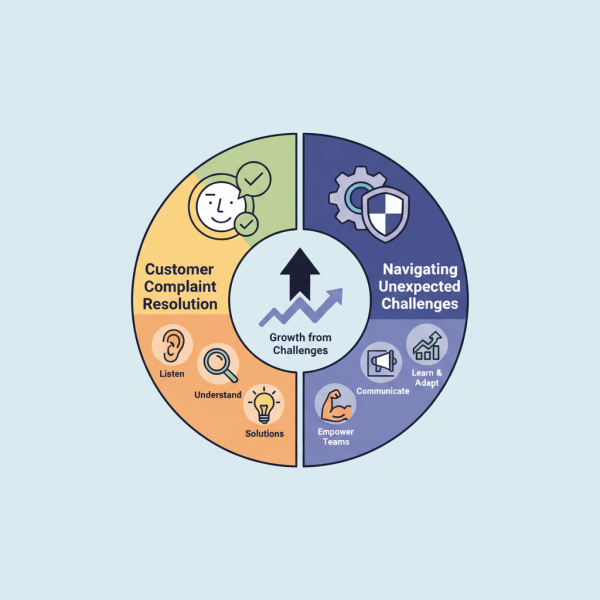
Customer complaints, while sometimes uncomfortable, are invaluable feedback mechanisms. They highlight areas for improvement and, when handled correctly, can strengthen customer loyalty. The key is to approach each complaint with a structured and empathetic mindset.
Empathy and Active Listening: The first crucial step is to truly listen to the customer. Allow them to fully articulate their issue without interruption. Show empathy by acknowledging their feelings and validating their experience. Phrases like "I understand how frustrating this must be" can de-escalate tension and build rapport.
Understanding the Root Cause: Once the customer has finished, ask clarifying questions to pinpoint the exact problem. Avoid making assumptions. Dig deep to understand not just what happened, but why it happened and what impact it had on the customer. This helps in addressing the core issue rather than just the symptoms.
Proposing Solutions: After fully understanding the situation, present clear, actionable solutions. Offer options where possible, empowering the customer to choose. Ensure the proposed resolution is fair, realistic, and addresses their specific concern. If a direct resolution isn't immediately possible, explain the steps you will take and set clear expectations for follow-up.
Follow-Up and Feedback: A critical, often overlooked step, is the follow-up. Check in with the customer to ensure the resolution was satisfactory and that they are pleased with the outcome. This demonstrates commitment to their satisfaction and provides an opportunity to gather further feedback, reinforcing their value to your business.
Navigating Unexpected Challenges
Beyond individual complaints, businesses often face broader, unexpected challenges such as supply chain disruptions, system outages, or public relations incidents. Managing these requires a different, often more strategic, approach.
Proactive Planning and Risk Assessment: The best defense against unexpected challenges is proactive preparation. Conduct regular risk assessments to identify potential vulnerabilities in your operations, processes, and external dependencies. Develop contingency plans for various scenarios, outlining roles, responsibilities, and communication protocols. This foresight minimizes panic and enables a more organized response when a crisis hits.
Crisis Communication: During an unexpected challenge, clear, consistent, and timely communication is paramount. Internally, ensure all relevant teams are informed and aligned. Externally, communicate transparently with affected customers, partners, and stakeholders. Acknowledge the problem, explain what steps are being taken, and provide realistic timelines for resolution. Silence or vague statements can quickly erode trust.
Team Empowerment and Resource Mobilization: Empower your team members to act decisively within their scope of responsibility during a crisis. Ensure they have the necessary resources, information, and support. Rapidly mobilize internal and external resources as needed to mitigate the impact of the challenge and expedite its resolution. A well-trained and supported team is an invaluable asset.
Learning from Setbacks: Every challenge, once resolved, presents a learning opportunity. Conduct a post-mortem analysis to review what went well, what could have been handled better, and what new risks have emerged. Update your contingency plans, training programs, and standard operating procedures based on these insights to strengthen future resilience.
Essential Skills for Effective Resolution
Cultivating specific skills within your team and yourself is vital for consistently handling difficult situations with grace and effectiveness.
- Communication Clarity: The ability to convey information accurately, concisely, and empathetically, both verbally and in writing, is fundamental to de-escalating tension and ensuring understanding.
- Problem-Solving Aptitude: A systematic approach to identifying problems, analyzing potential causes, generating solutions, and implementing the most effective course of action is indispensable.
- Emotional Intelligence: Understanding and managing one's own emotions, as well as recognizing and influencing the emotions of others, helps in maintaining composure and fostering constructive interactions.
- Resilience and Adaptability: The capacity to bounce back from setbacks, adjust to changing circumstances, and remain effective under pressure is crucial for navigating dynamic and challenging environments.
These skills are not innate; they can be developed through training, experience, and continuous self-reflection. Organizations should invest in training programs that equip employees with the tools and techniques needed to excel in these areas.
Key Steps in Customer Complaint Resolution:
- Listen Actively and Empathize
- Understand the Core Issue
- Offer Clear, Actionable Solutions
- Follow Up for Satisfaction
Strategies for Managing Unexpected Challenges:
- Plan Proactively with Risk Assessments
- Communicate Transparently and Timely
- Empower Teams and Mobilize Resources
- Learn and Adapt from Experiences
Summary
Effectively handling difficult situations, whether resolving individual customer complaints or managing large-scale unexpected challenges, is critical for business longevity and success. It demands a combination of empathy, active listening, clear communication, proactive planning, and a commitment to continuous improvement. By mastering these approaches and fostering a culture of resilience and problem-solving, businesses can not only mitigate negative impacts but also build stronger relationships, enhance their reputation, and emerge stronger from adversity.
Comprehension questions
 What are the four crucial steps involved in effectively resolving customer complaints?Why is proactive planning and risk assessment important when navigating unexpected business challenges?Which essential skills are highlighted as vital for handling difficult situations with grace and effectiveness?What role does post-mortem analysis play after a challenge has been resolved?
Review Quiz
Next Lesson

Course Contents : Running a Local Handyman Business
- >> 12.
 Resolving Complaints and Navigating Challenges